Passing On an Item: Match Its Condition to the Next Step
Passing on an item is easier when its condition matches the next step. Compare donation, resale, reuse and disposal, then confirm the recipient’s rules.
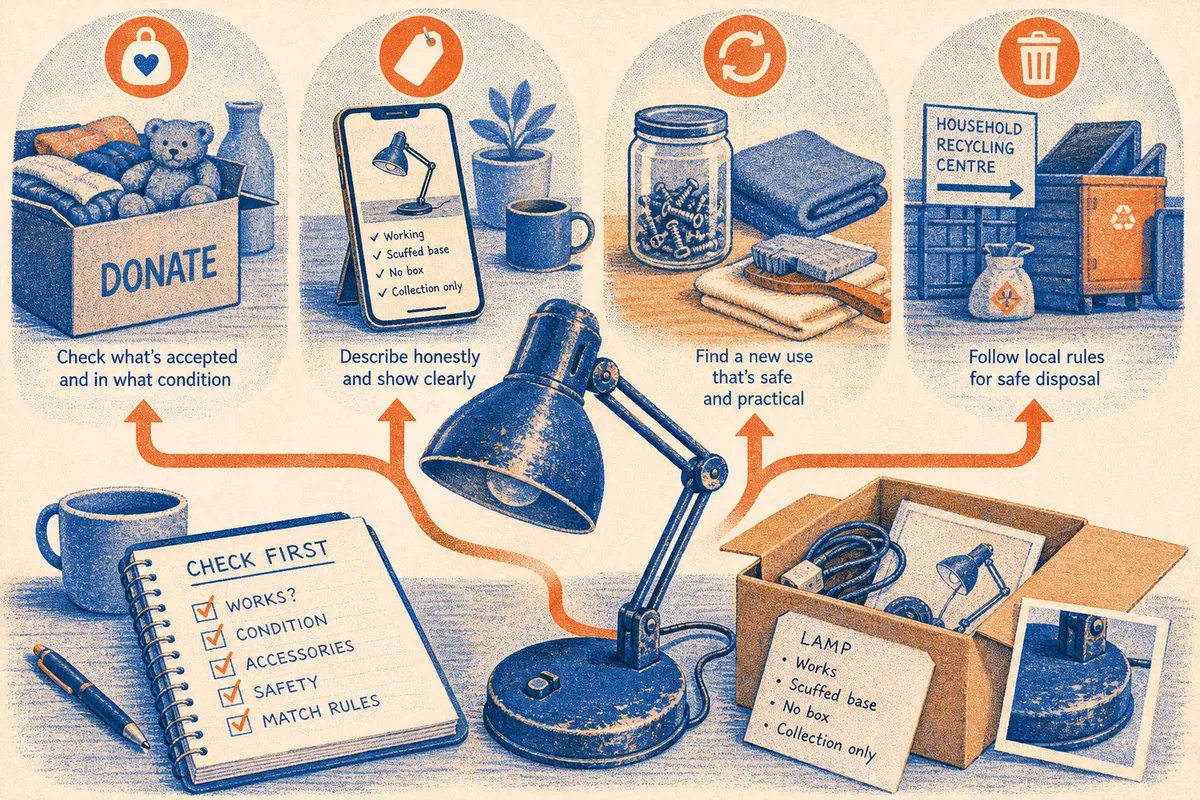
Passing on an item starts with checking what it can actually do now. A coat with a sound zip may suit a charity shop; one with a torn lining may need repair first. Match its condition to a possible destination, then confirm that the recipient can accept it.
Assess Its Condition
Ask whether someone else could use the item safely and without unreasonable effort. Check the parts that matter in ordinary use: fastenings, cords, seams, lids, wheels, hinges and controls. A gentle clean can reveal whether a mark is dirt or damage; do not disguise a fault with paint or a vague description.
Sort items into four groups: ready to pass on, usable after repair, potentially useful for parts or materials, and unsuitable for further use. A lamp with a damaged cable is not ready to hand over as a working lamp. Check the product maker’s instructions and local guidance before considering repair or disposal, and consult a qualified professional if electrical safety is uncertain.
Keep instructions and accessories with the item when available. A board game without essential pieces, a charger without a confirmed match or shelving without its fixings may be harder to use than it looks. State what is missing rather than leaving the next owner to guess.
Check Donation Fit
Donation may suit clean, functional goods, but each charity shop, furniture project, library, community group or reuse scheme sets its own acceptance rules. A recipient might welcome a desk but lack room for a wardrobe, or accept clothing while declining mattresses.
Check the organisation’s current guidance before loading the car or leaving a bag. Look for accepted item types, condition requirements, opening arrangements and collection terms. If anything is unclear, ask first; acceptance depends on the recipient’s rules and capacity.
Prepare the item according to the recipient’s instructions. Keep pairs together, bundle curtain hooks with curtains, and secure small detachable parts in a labelled envelope. For damp, mouldy, pest-affected or otherwise questionable goods, ask the intended recipient what it accepts and check local guidance before handling or disposal.
Electrical goods, toys, baby equipment and upholstered furniture can raise safety, recall, hygiene or fire-related concerns. Requirements depend on the item and local rules. Check the relevant official guidance and ask the recipient directly; if you remain unsure about safety, consult an appropriate qualified professional rather than passing the item on.
Describe Resale Honestly
Resale can suit an item with a clear use and a condition a buyer can judge: a working hand tool, readable book, clean coat or complete kitchen appliance. Choose a local selling group, second-hand shop or specialist platform that fits the item. Consider the effort involved in taking photographs, answering questions, arranging collection and handling payment.
Describe faults that affect use or appearance, including scratches, missing accessories, intermittent operation, alterations and repairs. Photograph visible damage in good light. If you have not confirmed that an electrical item works, say so plainly and do not list it as working.
Include details a prospective owner needs: maker and model where visible, size where relevant, material, included parts and collection arrangements. For complex products, include the manual or point to reliable manufacturer instructions if available. Avoid claims about safety, performance or compatibility that you cannot support.
Imagine you have a desk lamp with a scuffed base and no original box. You check that it switches on, photograph the scuff, state that the box is missing and offer collection; a buyer can then decide with those details in view. If you notice a frayed cable, do not present it as a usable lamp: pause and seek suitable repair or disposal guidance.
Consider Reuse
Reuse does not always mean finding a new owner. A sturdy glass jar might hold screws in a workshop, a worn cotton sheet might become cleaning cloths, and a clean, intact towel might serve as a pet-drying towel. Choose a purpose that suits the material and keeps it practical.
Take care with damaged or contaminated materials. Do not turn electrical equipment with exposed wiring into a household object, or use a cracked or contaminated food container for a purpose it cannot safely serve. Keep chemicals, batteries and other potentially hazardous items out of casual reuse; check the product label and local handling guidance for an appropriate route.
Parts recovery may make sense when an item no longer works as a whole. Ask a repair group, community workshop or specialist recycler whether it accepts the item; not every organisation can dismantle it. If you take it apart yourself, follow the maker’s safety instructions and contain sharp edges and small components safely.
Follow Local Disposal Rules
Disposal may be appropriate when an item is unsafe, contaminated, beyond reasonable repair or refused by suitable reuse routes. Local rules and services differ, and the correct route depends on the item. Check your council’s current guidance or ask its waste service before putting an unfamiliar item in general rubbish.
Electrical goods, batteries, lamps, paint and cleaning chemicals may need separate handling or a designated collection route. Keep uncertain items apart from ordinary waste until you have checked local instructions, the product label or advice from the relevant service. Do not assume that a route used for one item applies to another.
For bulky items, ask the local service whether collection needs to be arranged, whether dismantling is required and where the item should be left. Do not leave furniture or bags on a pavement without permission: they can obstruct people and may breach local rules. If a service declines an item, ask which route it recommends instead.
Which Route Fits?
Can I donate a broken item?
Only if the organisation confirms that it accepts broken goods for repair, parts or recycling. Disclose the fault before drop-off and follow its instructions; if it declines the item, check another suitable route or local waste guidance.
Should I repair before selling?
Consider repair when the work is safe, within your ability and worth the effort. Describe any repair honestly; if you cannot fix the fault confidently, offer the item for parts or repair only when the selling channel permits it and the limitation is clear.
What if a charity shop refuses it?
Ask whether another branch, collection service or specialist reuse group accepts that item, and check its condition rules. If no suitable recipient is available, consult local waste guidance rather than leaving the item outside or giving it to someone unprepared to handle it.
How should I describe an unknown fault?
State what you observed and what you have not checked: for example, “the dial turns, but I have not checked the heating function”. Do not guess at a diagnosis or describe uncertain equipment as safe or fully working.
Make The Handover Clear
Before collection or drop-off, remove personal information from devices, wipe private labels from reusable containers and check pockets, drawers and cases for belongings. Keep detachable pieces together, but include cables or accessories only when they belong with the item. Agree access and lifting arrangements in advance for heavy furniture.
A short handover note can cover what works, what does not, what is included and any repair already made. In a listing, put the main limitation near the top. Clear wording helps the recipient make an informed decision and can prevent an unnecessary second journey.
Before passing an item on, compare your description with the object in front of you and check that the next person knows what to expect. If a safety-sensitive item raises doubts, pause the handover and seek guidance from the recipient or a qualified professional; a clear no is more useful than an uncertain yes.
The Price Tag Is Not the Whole Cost
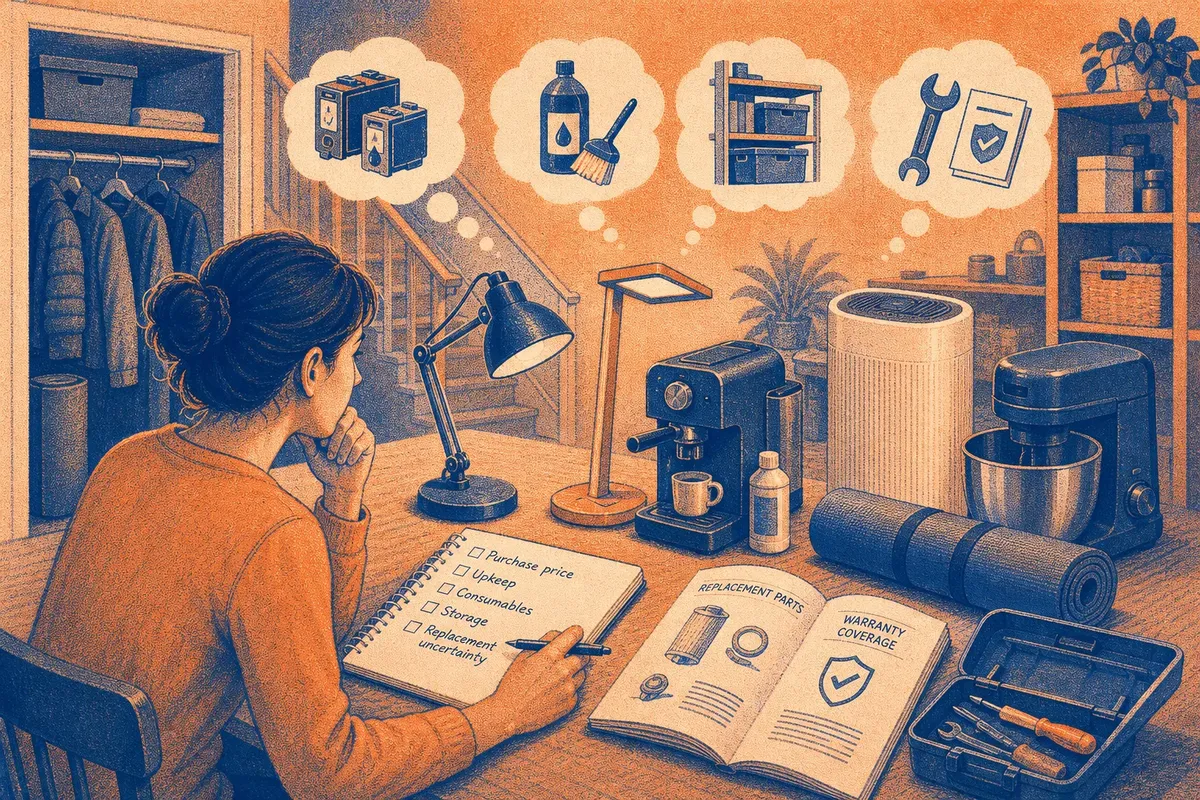
Compare the real cost of buying an item by weighing its purchase price against upkeep, consumables,…

Reading a Fabric Care Label Without Guesswork
Reading a fabric care label helps you decode garment instructions, inspect vulnerable details and choose a…