Before You Replace a Wobbly Chair
A wobbly chair may need a small repair or professional attention. Learn what to inspect, when to stop, and how to choose a safer next move.
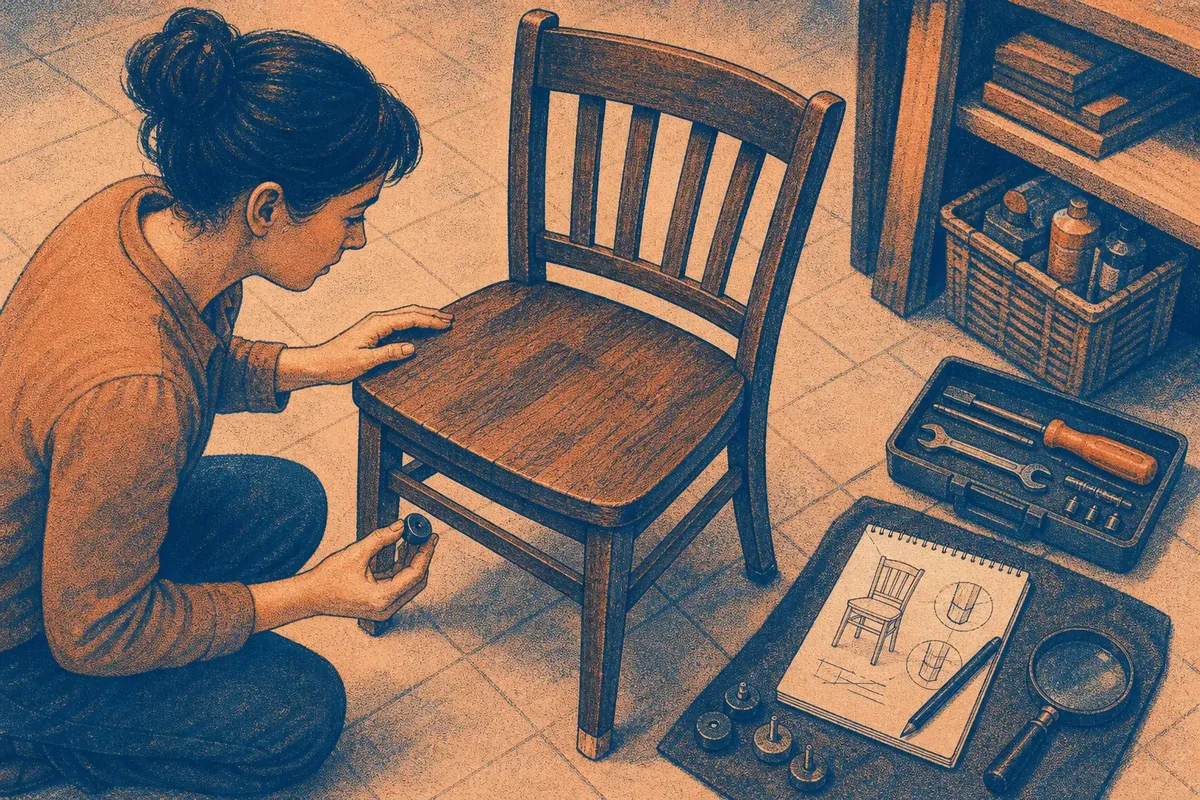
A wobbly chair needs a careful diagnosis before you reach for glue or a screwdriver. To repair a wobbly chair, start by distinguishing a missing foot glide or loose fitting from a moving joint or damaged frame; if you suspect structural trouble, keep the chair out of use and ask a qualified furniture professional to assess it.
Locate the movement
Place the empty chair on a firm, level floor, away from rugs that might hide a rocking foot. From the side, observe whether a foot lifts; with the chair still empty, apply only gentle hand pressure to the seat and back, stopping at once if a joint shifts, a crack opens or you hear a sharp sound.
If a foot rocks but the frame and joints appear still, the floor or a missing glide may be involved. Movement where a leg meets a rail, or a part that shifts against another, calls for more caution: do not use the chair while the cause is uncertain.
Turn the chair over only if you can do so comfortably and safely. Support it on a protected surface rather than balancing it on its back or arms, then look for screws, bolts, wooden pegs, corner blocks and glue lines that may reveal how it was assembled.
Read the joints
A raised screw or bolt head, a gap around a fitting or movement where a brace meets a leg can point to a loose fastener. If the fitting is clearly accessible, the surrounding material looks intact and you can identify the correct screwdriver or spanner, tighten it gently; stop if it spins, resists or remains loose.
A wooden joint may loosen without any visible screw. A gap where a leg meets a rail, shifting at the connection or flaking adhesive nearby is a reason not to pour glue around the assembled joint: it may not reach the bonding surfaces and can complicate a later repair.
Some wooden-joint repairs require separating the pieces, removing old adhesive, applying suitable wood glue and clamping the joint square while it cures. The right method depends on the construction and condition; leave load-bearing, misaligned, hard-to-reach or unclear joints to a furniture professional.
Inspect the frame
Look over the legs, stretchers, rails, arms and underside of the seat for cracks, missing pieces, crushed wood around a screw, bent metal or edges that no longer meet cleanly. A surface scratch differs from a split in a leg or seat rail, but an at-home visual check cannot establish that a chair with suspected structural damage is safe to use.
Pay particular attention to cracks that cross the grain, continue into a joint or divide a part that supports the seat. If you find one, cannot tell what it means, or notice a part shifting, keep the chair unused and seek an assessment from a qualified furniture repairer.
Check the feet as well. A missing glide can make a chair rock or scrape, while a damaged or uneven leg can imitate a loose connection; do not trim a sound leg to level the chair.
Say you have an empty dining chair rocking on tile, with one bare wooden foot where its glide has come off. You observe that the leg is intact and the joints do not shift under gentle hand pressure, so you fit a compatible glide and see that the chair rests evenly; that visible change does not certify the frame as safe. If the leg had moved or shown a crack, the decision would be to leave the chair unused and arrange a professional assessment instead.
Choose a repair route
Use what you can observe to decide whether to stop, make a limited adjustment or call a professional. These checks help identify warning signs; they cannot clear a repaired or structurally suspect chair for use.
- Raised screw or bolt head: Check whether the fitting is loose and the surrounding material appears intact. If it tightens gently and stays in place, stop rather than overtightening; if it spins, remains loose or the material is split, leave the chair unused and ask a furniture repairer to assess it.
- Fastener that turns without tightening: Check for a worn hole, split wood or a missing fitting. If you see damage or cannot identify the cause, do not fit a larger screw; keep the chair out of use and ask a professional to assess the connection.
- Gap at a wooden joint: Check whether the joint is separated, whether nearby parts show damage and whether you can identify its construction. If it is load-bearing, misaligned or unclear, leave it untouched and seek professional assessment; if it is accessible but you are unsure how it comes apart, do the same rather than applying glue around the outside.
- Missing foot glide: Check whether the leg is intact and the joints show no movement under gentle hand pressure. If both appear sound, fit a compatible glide and observe whether the chair rests evenly; if the leg shifts, is cracked or the wobble remains, stop and arrange an assessment.
- Split, bent or missing frame part: Check whether the part supports the seat or braces the frame, and whether its role is unclear. If it is structural or uncertain, keep the chair unused and ask a furniture repairer about repair or replacement; if you see only a surface mark, do not treat that mark alone as proof of structural damage.
- Several moving joints or unfamiliar construction: Check whether multiple connections shift or you cannot identify how the frame is assembled. If either applies, avoid a partial repair and ask a furniture professional to inspect the chair; if no movement is visible but the wobble remains unexplained, leave it unused until assessed.
- Antique or personally valuable chair: Check whether glue, sanding or replacement hardware could change its finish or character. If preserving those features matters, consult a restorer before altering the chair; if it does not, still seek professional help for any structural uncertainty.
A visual check or gentle pressure at home cannot certify a repaired chair as safe. A qualified furniture professional can inspect its construction and repair, then advise whether it is suitable to return to use; do not sit on it while a structural concern remains.
Wobbly chair questions?
Can I sit on a wobbly chair to locate the problem?
No. Observe the empty chair and use only gentle hand pressure, stopping if a joint shifts, a crack opens or a sharp sound occurs. If the source remains unclear, leave it unused and seek professional advice.
How can I tell a loose joint from a broken leg?
A loose joint moves where two parts meet; a damaged leg may show a split, bend, crushed area or missing material. If you cannot distinguish the cause, keep the chair out of use and ask a repairer to inspect it.
Should I put wood glue on a moving joint?
Not before identifying how the joint is built and whether it can be properly separated and cleaned. Glue applied around the outside may miss the hidden bonding surfaces and complicate a later repair.
Who can assess a chair after a structural repair?
Ask a qualified furniture repairer or restorer to inspect the construction and repaired connection. A chair that looks tidy or rests evenly has not thereby been cleared as safe.
Decide the next move
Once you have located the likely source of the wobble, decide whether a simple glide or accessible fastener is involved, or whether you need an expert assessment. A furniture repairer can also advise whether the finish or upholstery needs separate attention; appearance alone does not show that the structure is sound.
If a limited repair is appropriate, use the correctly sized screwdriver or spanner, protect the finish and follow the adhesive maker’s instructions when glue is suitable. Do not use a sitting test to check a repair, and do not return the chair to use while any structural concern remains.
Before replacing a wobbly chair, consider whether the visible cause is a missing glide or accessible fastener, or possible frame damage. The useful distinction is what you can observe, not how small the wobble feels; for a safe decision about a repaired chair, a qualified furniture professional must assess it.

The Price Tag Is Not the Whole Cost
Compare the real cost of buying an item by weighing its purchase price against upkeep, consumables,…

Reading a Fabric Care Label Without Guesswork
Reading a fabric care label helps you decode garment instructions, inspect vulnerable details and choose a…